

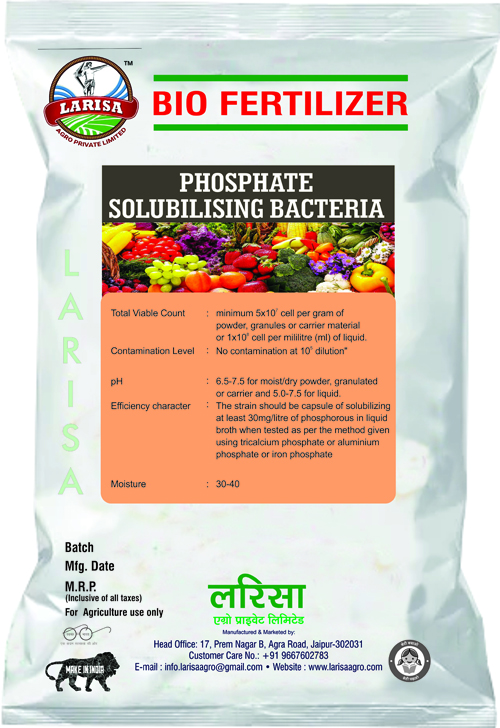
LARISA PSB P solubilizing bacteria (PSB), that enhance the efficient use of P supports more sustainable cropping systems and the judicious use of mineral nutrients. In parallel, there is more attention on improving crop root P acquisition of existing soil P pools as well as by increasing the proportion of fertilizer P that is taken up by crops. Today, new lines of research are emerging to investigate the co-optimization of PSB-fertilizer-crop root processes for improved P efficiency and agricultural performance. In this review, we compile and summarize available findings on the beneficial effects of PSB on crop production with a focus on crop P acquisition via root system responses at the structural, functional and transcriptional levels. We discuss the current state of knowledge on the mechanisms of PSB-mediated P availability, both soil- and root-associated, as well as crop uptake via P solubilization, mineralization and mobilization, mainly through the production of organic acids and P-hydrolyzing enzymes, and effects on phytohormone signaling for crop root developement.
Benefits
- Increase micronutrient availability to plants from the soil like Mn, Mg, Fe, Mo, B, Zn, and Cu in addition to P2O5.
- Encourage faster root growth for water and nutrient uptake.
- PSB produces organic acids like malic acid, succinic acid, fumaric acid, citric acid, tartaric acid, and acetic acid which fasten the P2O5 uptake, maturity, and increase yield.
Dosage: 500 ml– 1 Liter / Acre | Packaging: 500ml, 1000ml Bottle